
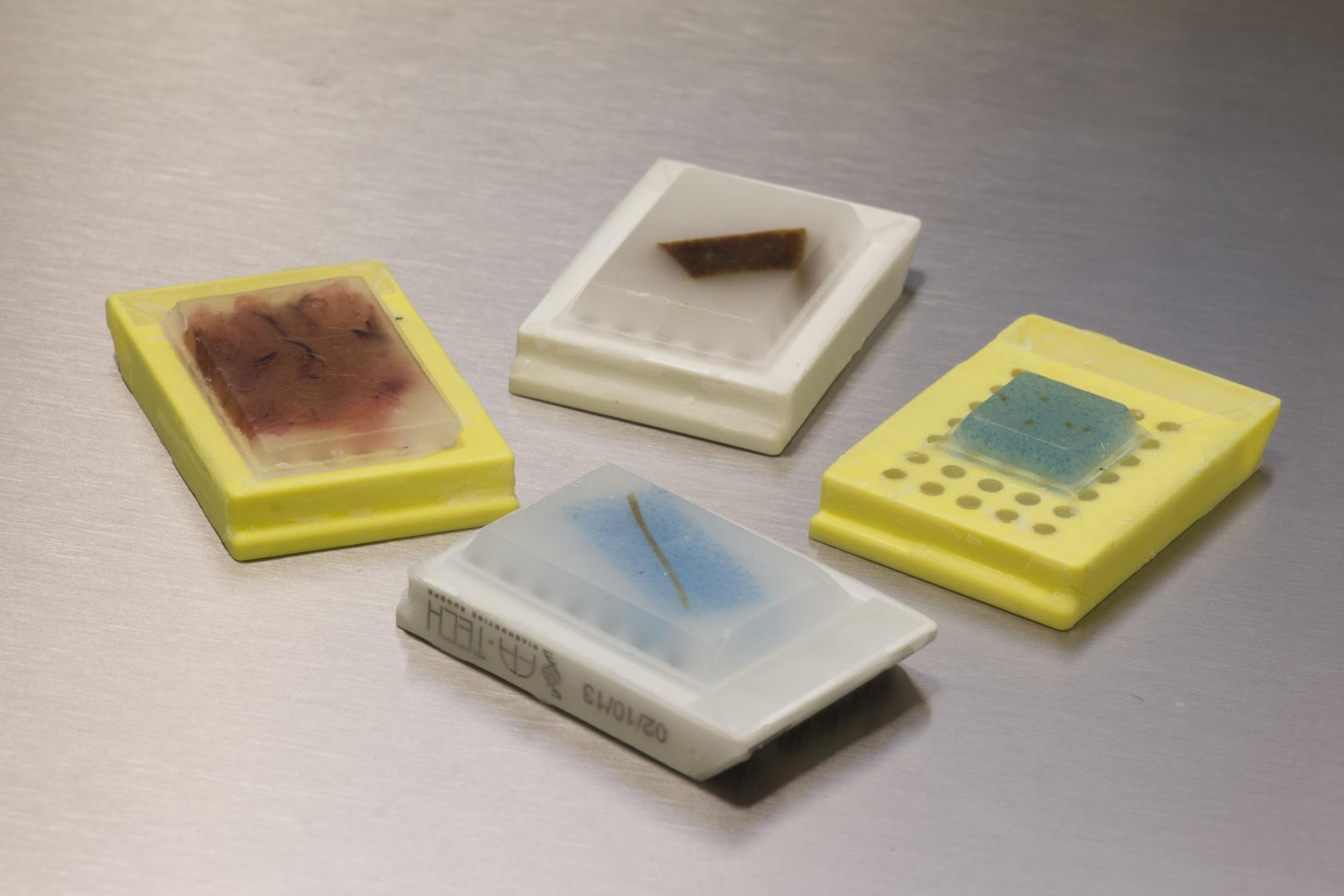
Tissue microarray (TMA) is a highly efficient and innovative technique used in pathology and biomedical research to analyze multiple tissue samples simultaneously. It has revolutionized the way scientists and clinicians study diseases, particularly cancer, by allowing high-throughput analysis of hundreds of specimens on a single slide. This technology saves time, reduces costs, and ensures consistency across experiments, making it a valuable tool in both research and diagnostic settings.
What is a Tissue Microarray?
A tissue microarray is a method in which small cylindrical cores of tissue are extracted from different donor paraffin-embedded tissue blocks and precisely arranged into a single recipient block. Once assembled, thin sections are cut from this block and placed onto microscope slides for analysis. Each slide can contain hundreds of tissue samples, allowing researchers to study multiple cases under identical experimental conditions.
This approach contrasts with traditional histological methods, where each tissue samples sample is processed and analyzed separately. By consolidating many samples into one slide, TMAs significantly increase efficiency and reduce variability.
How Tissue Microarrays are Constructed
The construction of a tissue microarray involves several carefully controlled steps. First, pathologists select representative regions from donor tissue blocks, usually based on prior histological evaluation. These regions are chosen to best reflect the characteristics of the disease or tissue type being studied.
Next, a specialized instrument called a tissue microarrayer is used to extract small cores, typically 0.6 to 2.0 mm in diameter, from the selected areas. These cores are then inserted into predefined positions within a recipient paraffin block. The arrangement is usually mapped in a grid format, allowing precise identification of each sample.
Once the recipient block is complete, it is sliced into thin sections using a microtome. These sections are mounted on slides and can be subjected to various staining techniques, such as immunohistochemistry (IHC), fluorescence in situ hybridization (FISH), or other molecular analyses.
Applications in Research and Medicine
Tissue microarrays have a wide range of applications, especially in cancer research. They are commonly used to study protein expression patterns, gene amplification, and biomarker validation across large numbers of tumor samples. This helps researchers identify potential diagnostic markers, prognostic indicators, and therapeutic targets.
In clinical settings, TMAs are valuable for validating new diagnostic tests and understanding disease progression. For example, they can be used to compare the expression of specific proteins in different stages of cancer or across various patient populations.
Pharmaceutical companies also utilize TMAs in drug development. By analyzing how different tissues respond to experimental treatments, researchers can assess drug efficacy and toxicity more efficiently.
Advantages of Tissue Microarrays
One of the primary advantages of tissue microarrays is their high-throughput capability. Researchers can analyze hundreds of samples simultaneously, which significantly speeds up data collection and analysis. This is particularly useful in large-scale studies where time and resources are limited.
Another key benefit is consistency. Since all samples on a TMA slide are processed under identical conditions, variability is minimized. This leads to more reliable and reproducible results.
Cost-effectiveness is also an important factor. TMAs reduce the need for reagents, labor, and storage space, making them an economical choice for many laboratories.
Additionally, TMAs preserve valuable tissue samples. Because only small cores are taken from donor blocks, the majority of the original tissue remains intact for future studies.
Limitations and Challenges
Despite their many advantages, tissue microarrays do have some limitations. One concern is sampling bias. Since only a small portion of each tissue is analyzed, it may not fully represent the heterogeneity of the entire sample. This can be particularly problematic in tumors, which often exhibit significant variation within a single lesion.
Another challenge is technical complexity. The construction of TMAs requires specialized equipment and expertise. Errors in core extraction or placement can affect the accuracy of results.
There is also the issue of tissue loss during processing. Some cores may become dislodged or damaged during sectioning or staining, leading to incomplete data.
Future Perspectives
The future of tissue microarray technology looks promising, with ongoing advancements aimed at improving accuracy and expanding applications. Integration with digital pathology and artificial intelligence is enhancing data analysis, allowing for more precise and automated interpretation of results.
Emerging techniques, such as multiplex staining, enable the simultaneous detection of multiple biomarkers within a single tissue section. This provides a more comprehensive understanding of complex biological processes.
As personalized medicine continues to evolve, TMAs will play a crucial role in identifying patient-specific biomarkers and tailoring treatments accordingly.
Conclusion
Tissue microarray technology has become an indispensable tool in modern biomedical research and diagnostics. Its ability to analyze multiple tissue samples efficiently and consistently has transformed the study of diseases, particularly cancer. While challenges remain, ongoing innovations are addressing these limitations and expanding the potential of TMAs. As a result, tissue microarrays will continue to contribute significantly to scientific discovery and improved patient care in the years to come.