
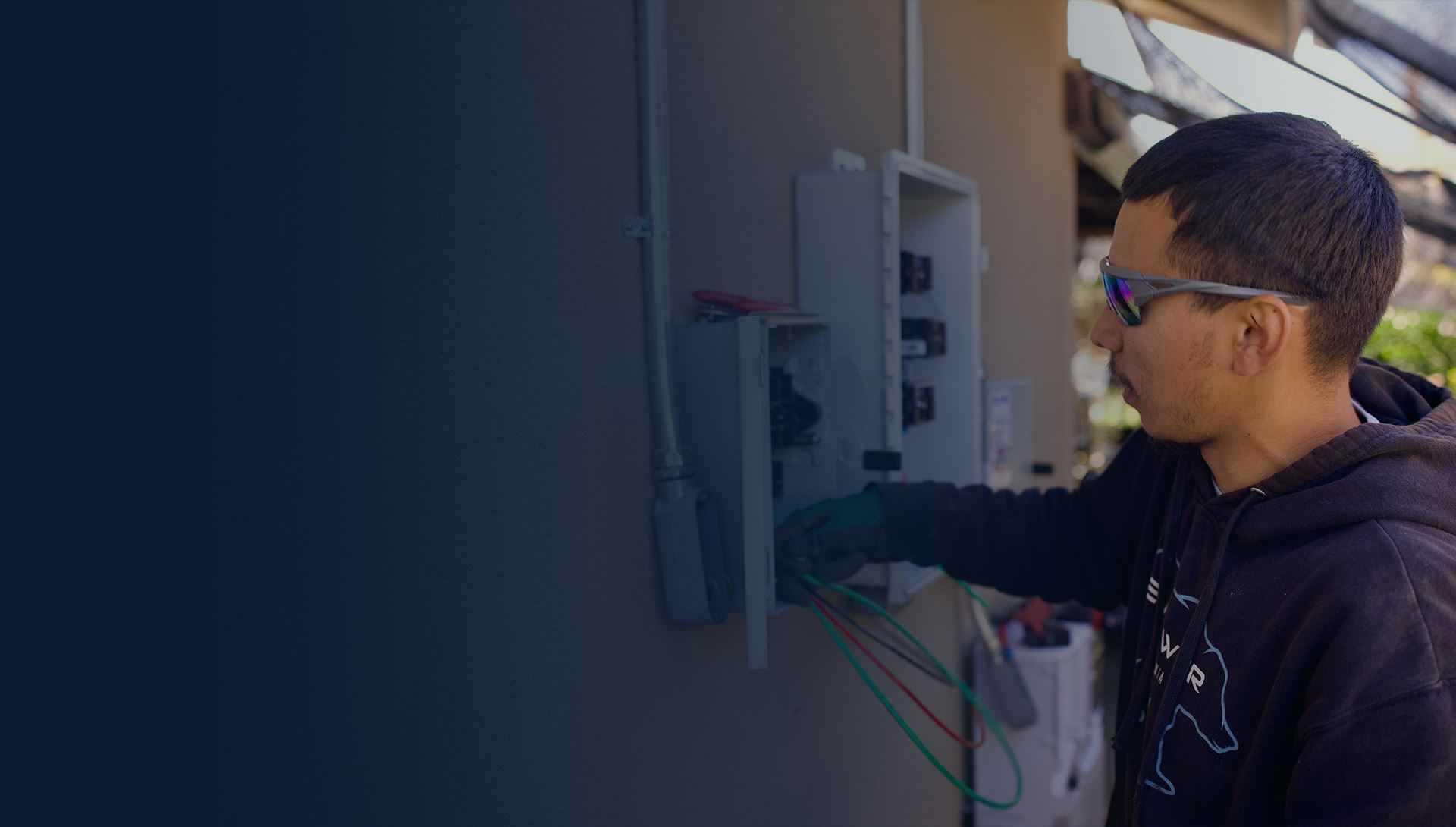
You’re considering a career as a certified electrician, but where do you start? First, you’ll need to meet the basic requirements, which might seem straightforward, but there’s more to it than just checking a few boxes. Once you’ve got those covered, you’ll be ready to dive into an apprenticeship program that combines hands-on training with classroom instruction. But what exactly does that entail, and how do you ensure you’re on the right path? By following these steps, you’ll be well on your way to a successful electrician career – but let’s break it down to make sure you’re fully prepared.
Meet the Basic Requirements
You’ll need to meet some basic requirements before starting your journey to become a certified electrician.
Firstly, you must be at least 18 years old to apply for an electrician training program. Additionally, you’ll need a high school diploma or equivalent, with a strong foundation in mathematics and science.
Having a good understanding of algebra and physics will help you grasp electrical concepts more easily. You’ll also need to have a valid driver’s license, as many electrician jobs require traveling to different work sites.
Furthermore, be prepared to pass a background check, as many employers and licensing authorities require it. Some states may have additional requirements, so it’s essential to check with your local authorities for specific prerequisites.
Complete an Apprenticeship Program
Meeting the basic requirements is just the first step towards becoming a certified electrician.
Now, you’ll need to gain hands-on experience through an apprenticeship program. This program will last four to five years, during which you’ll work under the supervision of a licensed electrician.
You’ll learn electrical codes, safety practices, and installation techniques while earning a salary.
You can find apprenticeship programs through trade organizations, such as the National Electrical Contractors Association (NECA) or the International Brotherhood of Electrical Workers (IBEW).
These programs combine on-the-job training with classroom instruction, allowing you to learn theoretical concepts and apply them in real-world scenarios.
You’ll work 8,000 hours, which is equivalent to four years of full-time work, and complete 144 hours of classroom instruction per year.
Through this apprenticeship, you’ll gain the skills and knowledge necessary to become a competent electrician.
You’ll learn about electrical circuits, blueprint reading, and safety procedures, preparing you for the demands of the trade.
Pass the Licensing Exam
The final hurdle to becoming a certified electrician is passing the licensing exam, a rigorous test of your knowledge and skills.
You’ve spent years honing your craft, and now it’s time to prove your expertise. The licensing exam will assess your understanding of electrical codes, safety protocols, and technical skills.
To prepare, review the exam format and content outline provided by your state’s licensing board.
Focus on areas where you need improvement, and practice solving problems similar to those you’ll encounter on the exam. You can also take practice exams or enroll in a prep course to boost your confidence.
On exam day, arrive early, and bring the required documents and materials.
Read each question carefully, and manage your time wisely. Remember, this is your chance to demonstrate your competence and commitment to the trade.
Stay calm, focused, and think critically – you’ve got this!
Obtain Certifications and Licenses
With the licensing exam behind you, it’s time to focus on obtaining the certifications and licenses that will officially recognize your expertise as a certified electrician.
You’ll need to apply for a license through your state’s licensing board, which will require submitting your exam results, proof of education, and any other necessary documentation.
Additionally, you may choose to obtain certifications from organizations like the International Association of Electrical Inspectors (IAEI) or the National Institute for Certification in Engineering Technologies (NICET).
These certifications demonstrate your expertise in specific areas of electrical work, such as electrical inspections or electrical construction.
Make sure to research the certification requirements and process for your desired certification.
Some states may also require you to complete continuing education courses to maintain your license.
Be sure to check with your state’s licensing board for specific requirements.
Launch Your Electrician Career
Now that you’ve obtained the necessary certifications and licenses, it’s time to put your skills to work and launch your electrician career.
You’ve worked hard to get to this point, and it’s essential to make a strong start. Begin by updating your resume to highlight your new credentials and any relevant work experience.
You should also create a professional online presence, such as a LinkedIn profile, to connect with potential employers and showcase your skills.
Next, start applying for riverside electricians jobs that match your skills and interests.
You can search for job openings on job boards, company websites, or through local trade organizations. Networking is also crucial in the electrical trade, so attend industry events, join local electrician associations, and reach out to experienced electricians in your network for advice and job leads.
Remember to stay organized and persistent in your job search.
It may take some time to land your first electrician job, but with a solid plan and a strong work ethic, you’ll be well on your way to a successful career as a certified electrician.
Conclusion
You’ve made it! Now that you’ve met the basic requirements, completed an apprenticeship program, passed the licensing exam, and obtained certifications and licenses, it’s time to put your skills to work. Update your resume, create a professional online presence, and start networking to land your first job. With persistence and hard work, you’ll be well on your way to a successful career as a certified electrician. Get out there and start building your future!